-
The Fried Chicken Burrito

Introducing the Fried Chicken Breakfast Burrito
This combination feels bold only in hindsight.
Fried chicken in a burrito isn’t a leap. Burritos have always welcomed fried, heavy proteins, and chicken has always been one of the most forgiving. Eggs and rice stabilize what’s already bold, sour cream rounds it, and the crunch does the rest.
Nothing here is trying to surprise you. That’s the point. It’s obvious in the way good ideas usually are—so obvious you start wondering why it wasn’t standard years ago.
Sometimes the only innovation is realizing the door was already open. -
Soup Savior Staples

🥣 How to Save a Bland (or Botched) Broth
We’ve all had it. A soup that’s just falls short. Or even worse, has too much going on. Unless it’s truly fallen off the cliff, these pantry staples acn rescue almost any broth and turn even the worst soups into something delicious.
💧 Water
Too salty? Burnt? Over-spiced?
As the saying goes: easy to add, impossible to take out. But you can dilute. Just expect to end up with more broth than you planned. Not always a bad thing.🧂 Salt
Sometimes it’s not broken—it’s just under-seasoned. A pinch or two can unlock flavor that’s already there. Always taste before reaching for anything else.🍜 MSG
Love it or hate it, it works. A tiny sprinkle adds deep umami and rounds out everything else.🍋 Acid
Lemon juice, lime, rice vinegar, or even a spoonful of tomato paste—acidity brightens a flat-tasting broth and adds sharpness. When it’s boring, add acid.🍯 Sugar (or Sweetness)
A tiny bit of sugar, honey, mirin, or even a splash of sweet soy can smooth out bitterness, harsh spice, or too much acid. Just don’t turn it into tea—this is broth, not dessert.🥄 Gelatin
Want that rich, restaurant-quality mouthfeel? Add a little unflavored gelatin. It mimics hours of bone simmering and gives thin broth a luscious, silky texture.🧂 Better Than Bouillon (or High-Quality Concentrates)
Let’s be honest: sometimes this is the whole soup. But when your homemade broth is lacking in depth, a small spoonful of this stuff can rescue the flavor and save the day. Just don’t go overboard or it starts tasting like cafeteria gravy.🐟 Fish Sauce
Smells brutal, works beautifully. It’s surprisingly less disruptive than soy sauce or miso and blends in seamlessly to add deep, savory complexity. Use with caution—a few drops is all you need.🌿 Fresh Herbs
Scallions, cilantro, parsley, dill—you name it. Toss some freshly chopped herbs on top and you instantly go from good to great. Use them right before serving for maximum lift.🧄 Fresh Aromatics
Garlic, onion, ginger—sautéed briefly in oil before being added to the pot—add a wave of new dimension. This is usually the essence you can never find in a canned or packaged broth. -
Food Lab: Buffalo Wings


Our Current Buffalo Wing Formula (That Beats Nearly Every Restaurant) 🔥🍗
• Sauce Ratio – 1:1 Frank’s Red Hot Sauce to butter
We tried increasing the ratios in both directions. Often, simple is best.• Sweeteners tested – sugar vs honey
Honey just tasted better. No explanation here. Add to taste until it’s just a touch sweet—Very forgiving, still good a lot sour, still good a lot sweet.• Acid trials – lemon vs vinegars
Tried to get fancy here. Turns out, omitting acid entirely and letting the tanginess of the hot sauce do the work is best. Simple wins again.• Roasted garlic bulb (not powder or minced)
Probably the only “fancy” thing in the recipe. It gives the sauce a smooth, mellow depth.• Wings coated in full cornstarch
(Sorry to the Buffalo wing purists.) It’s just better coated. Crispier, crunchier, more satisfying.• Deep fried, not baked or air-fried
Just eat the celery if you’re trying to be healthy. Don’t mess with the wings.• Wing choice – small jidoori drumettes (from Japanese markets)
Better crust-to-meat ratio. Cooks evenly. When they’re golden brown, they’re done.• Tried extra seasonings, rejected them
Buffalo wings aren’t meant to be overcomplicated. Like a McDonald’s cheeseburger—don’t try to dress it up, its not trying to win a Michellin Star here. Just let it shine.
Future Tests 🔬• Try potato starch or blend with cornstarch
→ Could change the crisp profile. Worth exploring.• Test Crystal’s Hot Sauce
→ Some say it’s better than Frank’s. We’ll see.• Find a better way to incorporate heat
→ Currently sprinkling cayenne pepper. Mixing it into the sauce alters consistency in a bad way. Still figuring this one out. -
Steak, Chimichurri, and Potatoes

Steak, chimmichurri, and roasted potatoes.
In your world of exploration and creativity, don’t forget the classics—and the beauty of simplicity. -
Shirataki Noodles

oneplus_0 Shirataki Noodles
This lesser-known Japanese noodle has a texture similar to rice vermicelli or mung bean noodles—and some might argue even better in its own right. The kicker? For the same volume, you’re only getting 10% of the calories.
Swapping them in entirely works great, but even going 50/50 keeps 95% of the satisfaction while seriously slashing the calories.
They shine in noodle soups (especially with the 50/50 method), or anywhere the noodles play a supporting role—think mung bean meatloaf, spring rolls, or vermicelli bowls.
And the cherry on top? No boiling, no stress. Just rinse, heat, and you’re good. They’re impossible to overcook—unlike rice vermicelli.
High payoff, low effort. -
Leftover Steaks Done Right
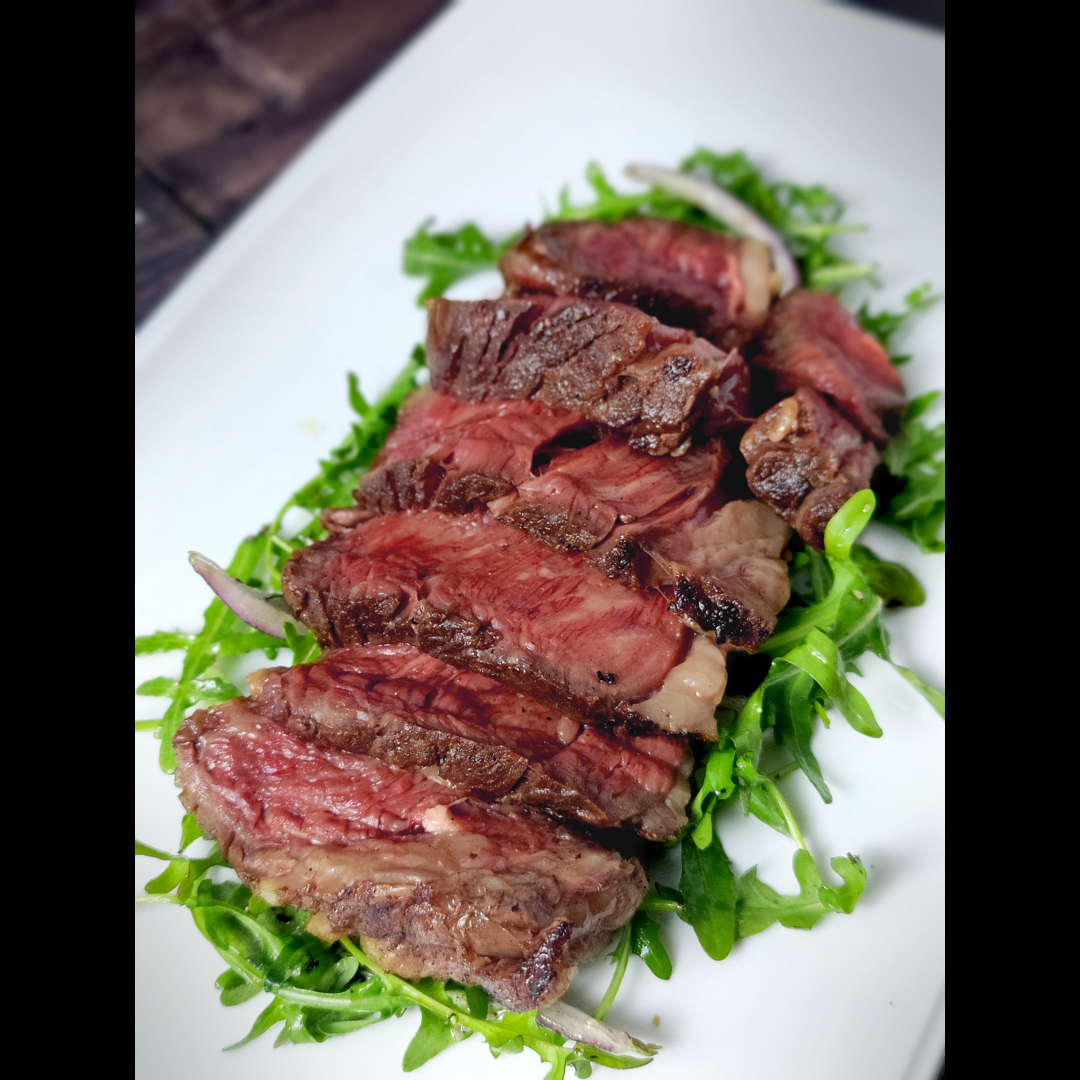
No need to turn last night’s beautiful steak into a sandwich like so many people do. With the right technique, you can actually enjoy your leftover steak as steak—not some afterthought meal. The key is heating it slowly and evenly. This gentle approach brings the center up to the ideal temperature—usually a few degrees above the fat-melting point (around 115°F), but still 3–4 degrees below the steak’s original doneness (typically in the high 120s to low 130s).
Here are a few great low-and-slow methods to bring your steak back to life:
Sous Vide – If you have the gear, just set it to the steak’s original cooking temperature. It’s the easiest way to get a perfectly reheated result.
Butter or Oil Poaching – All you need is a pan that fits the steak and enough butter (or oil) to cover it. You’ll need some patience here—turn the heat on and off as needed, and stir occasionally to maintain a low temp. Some even say this method tastes better than the original, thanks to the rich, buttery infusion.
Microwave (Yep, Really) – Surprisingly effective. Set the microwave to its lowest power setting and warm the steak gently. It won’t brown, but it will reheat evenly without drying out. A thermometer gun is probably needed for this method, unless you can train your fingers to sense the right temperature.
Final Touch (Optional but Sexy) – If you want to level it up, blast a pan on high heat and give the steak a quick 30-second sear. Since it’s already browned, this just adds a glossy finish and a bit of sizzle.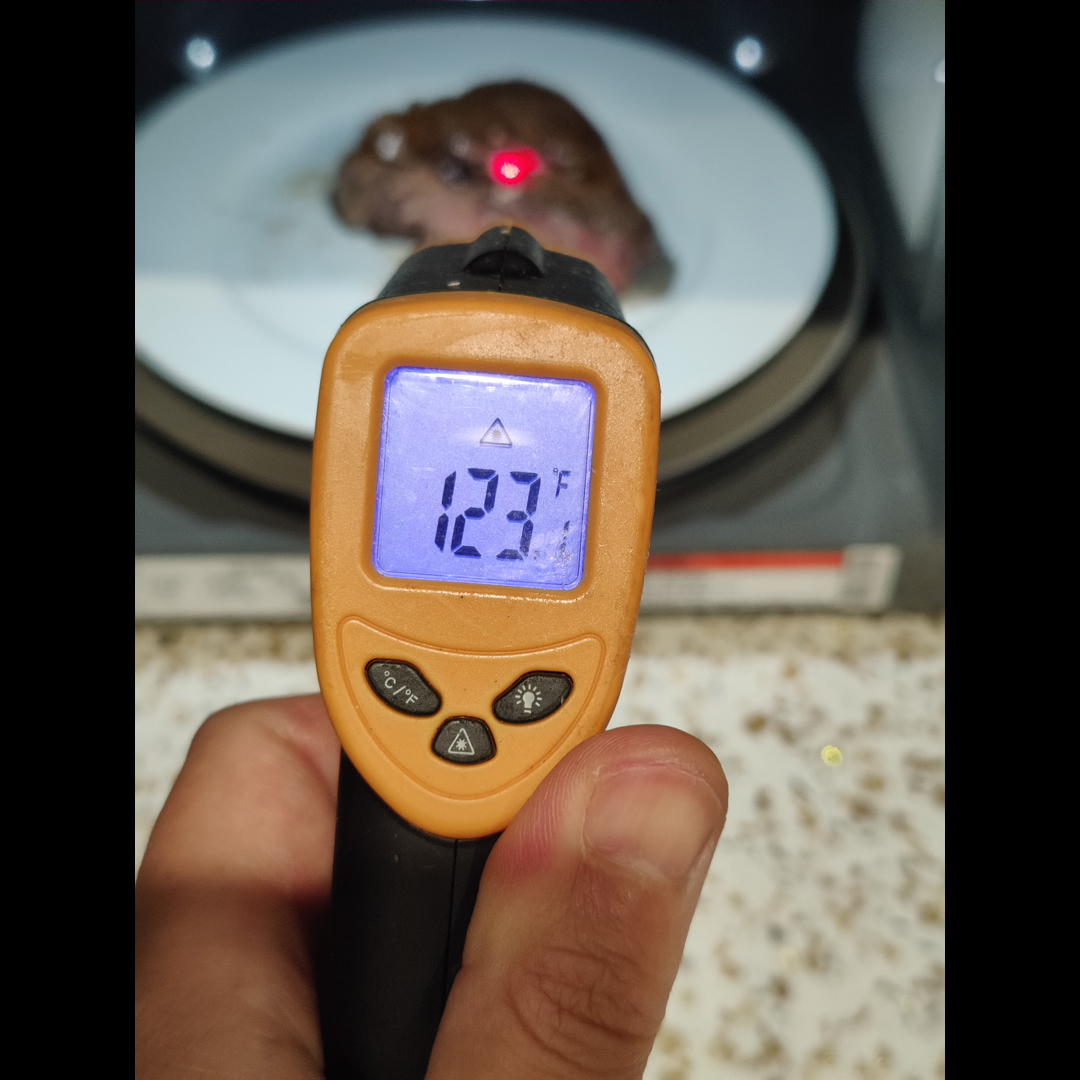
With a low temperature reheat… the outside is only a touch warmer than the inside because of even heating 
Roughly an 6 oz steak. Heated at 10% power for 9 minutes -
The French Mother Sauces Part II
Here are some dishes that showcase the five classic mother sauces, some surprisingly familiar
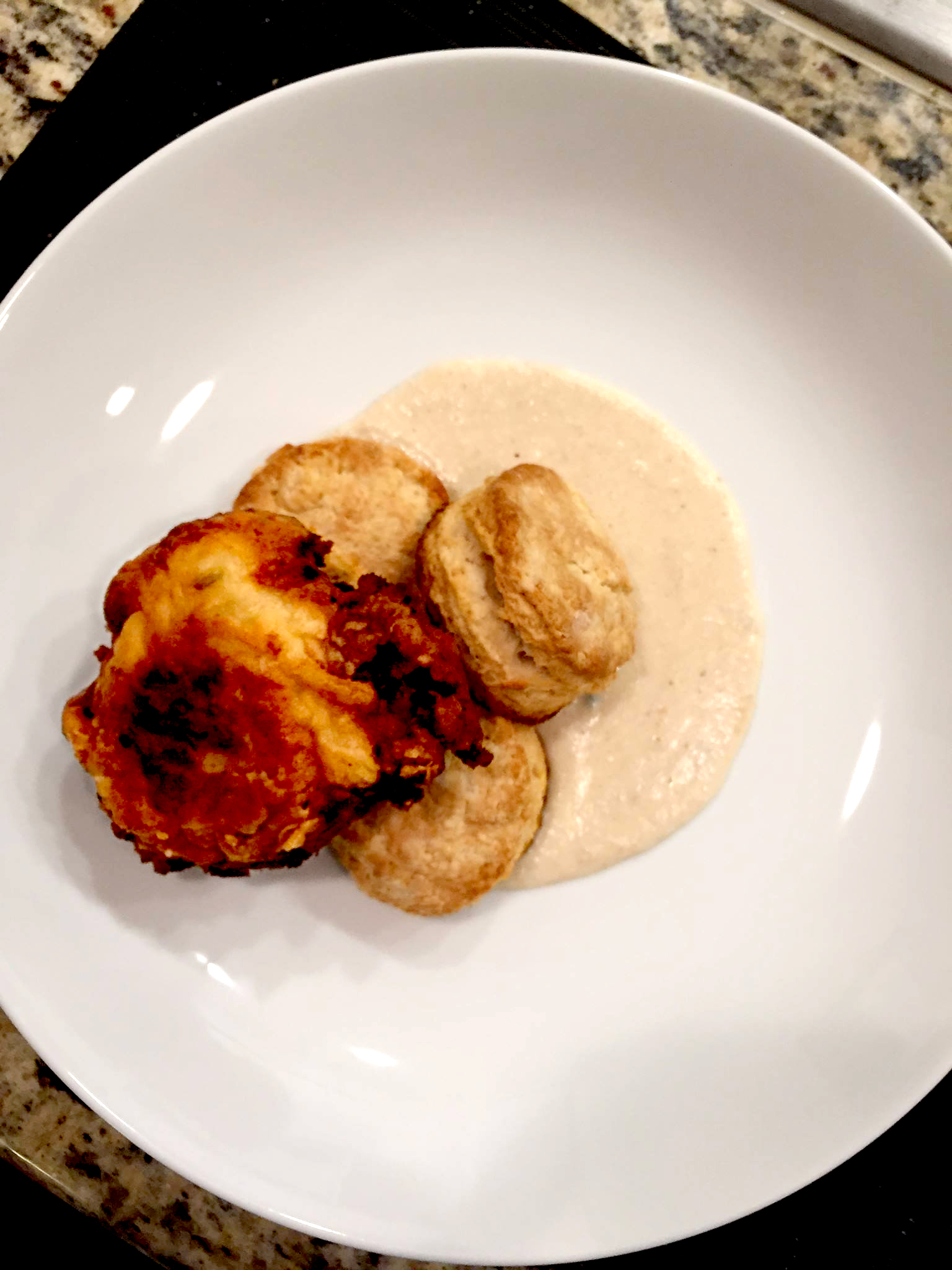
Béchamel – Biscuits and gravy with fried chicken
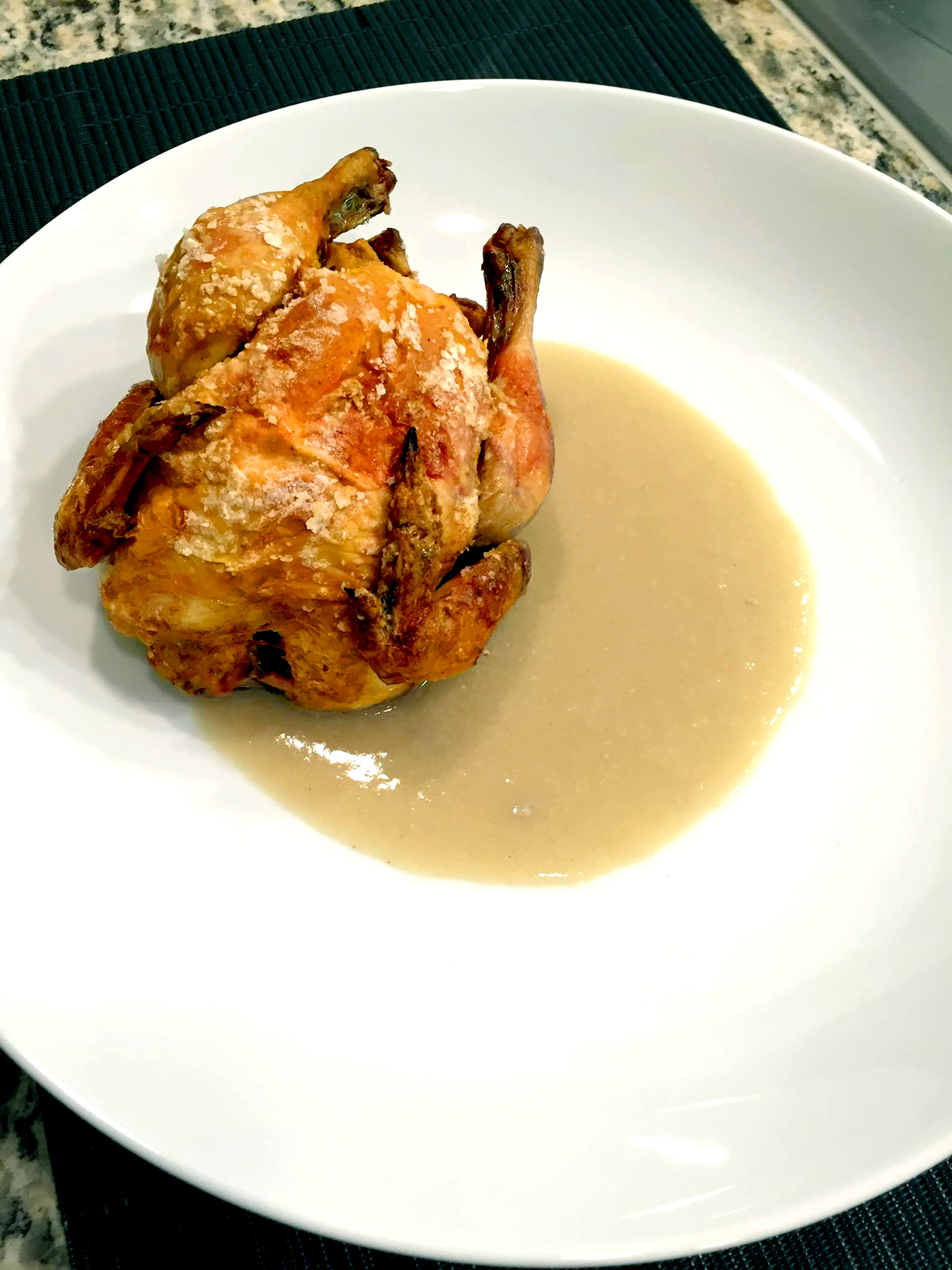
Velouté – Roasted chicken with gravy
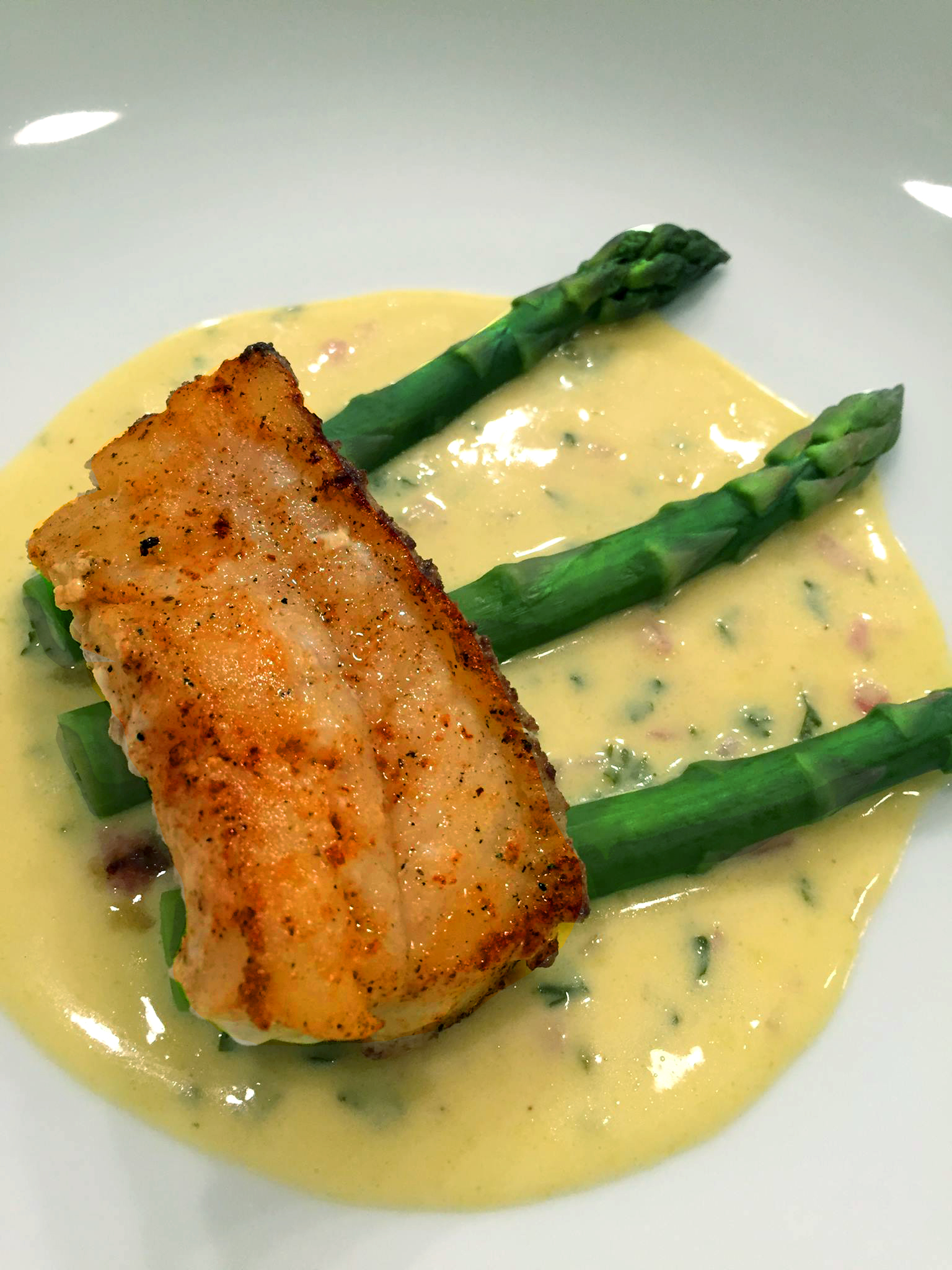
Hollandaise – Seafood and vegetables with Béarnaise
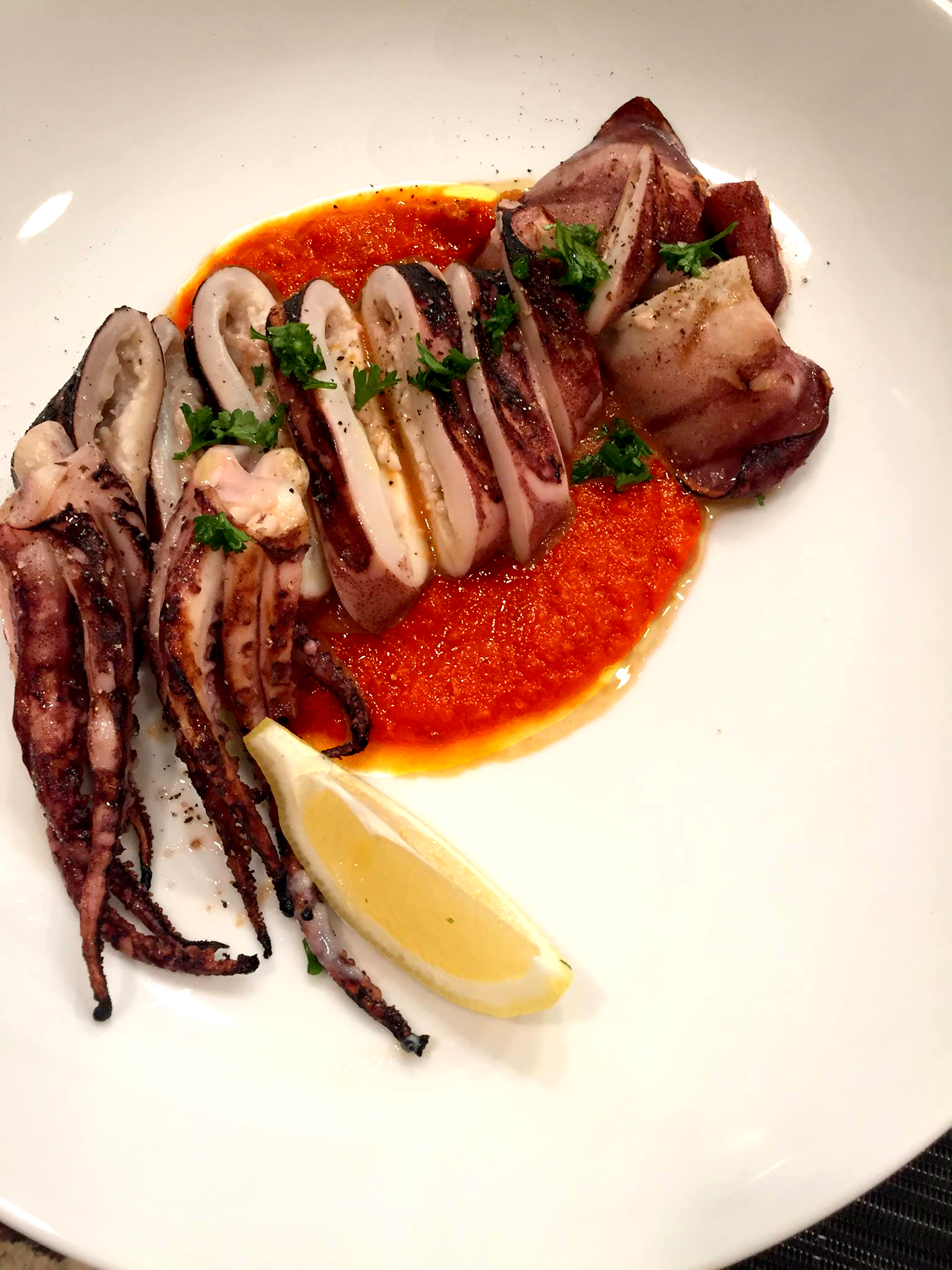
Tomate – Grilled squid with tomato sauce
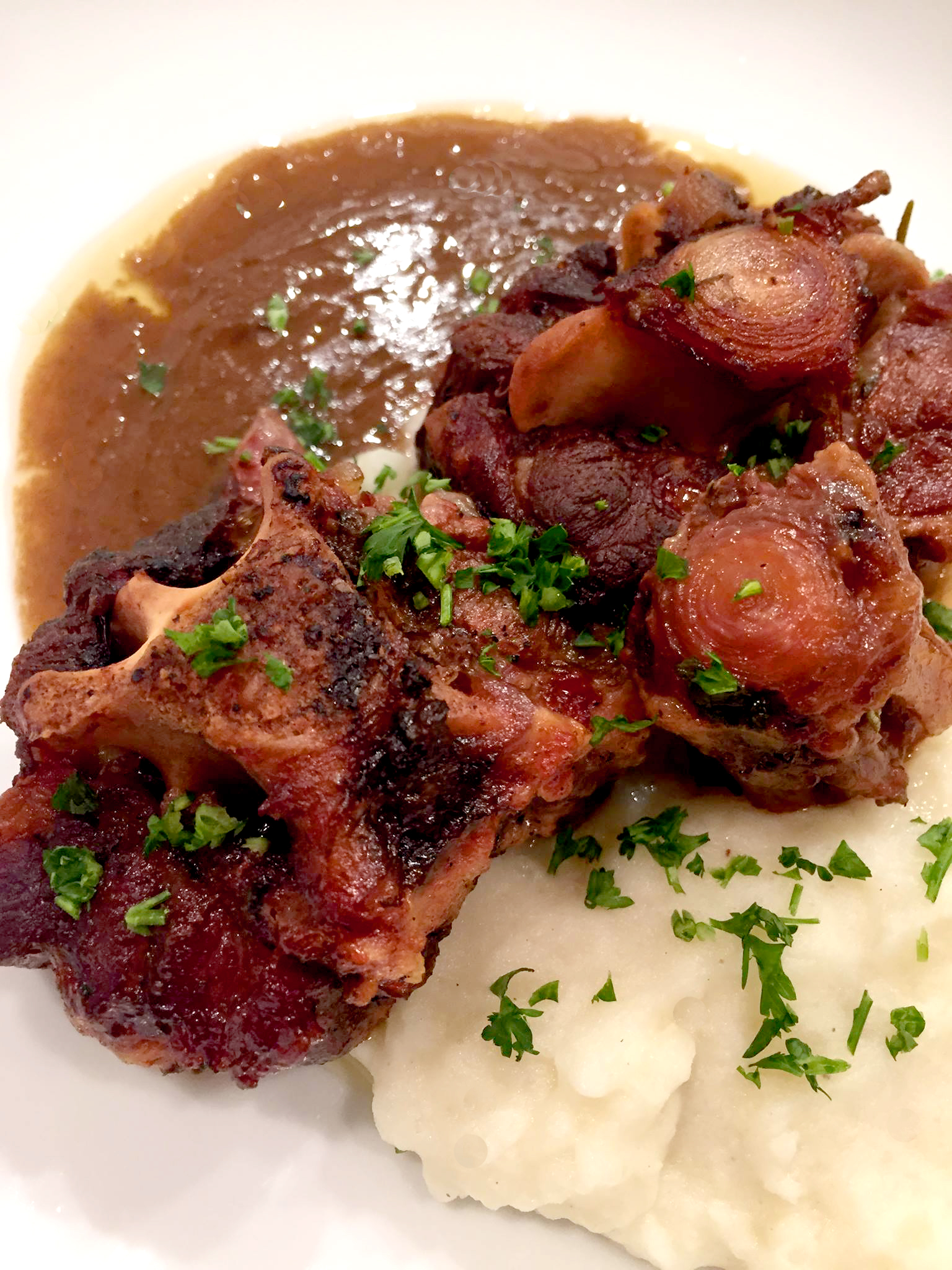
Espagnole – Braised oxtail with demi-glace
-
The French Mother Sauces Part 1
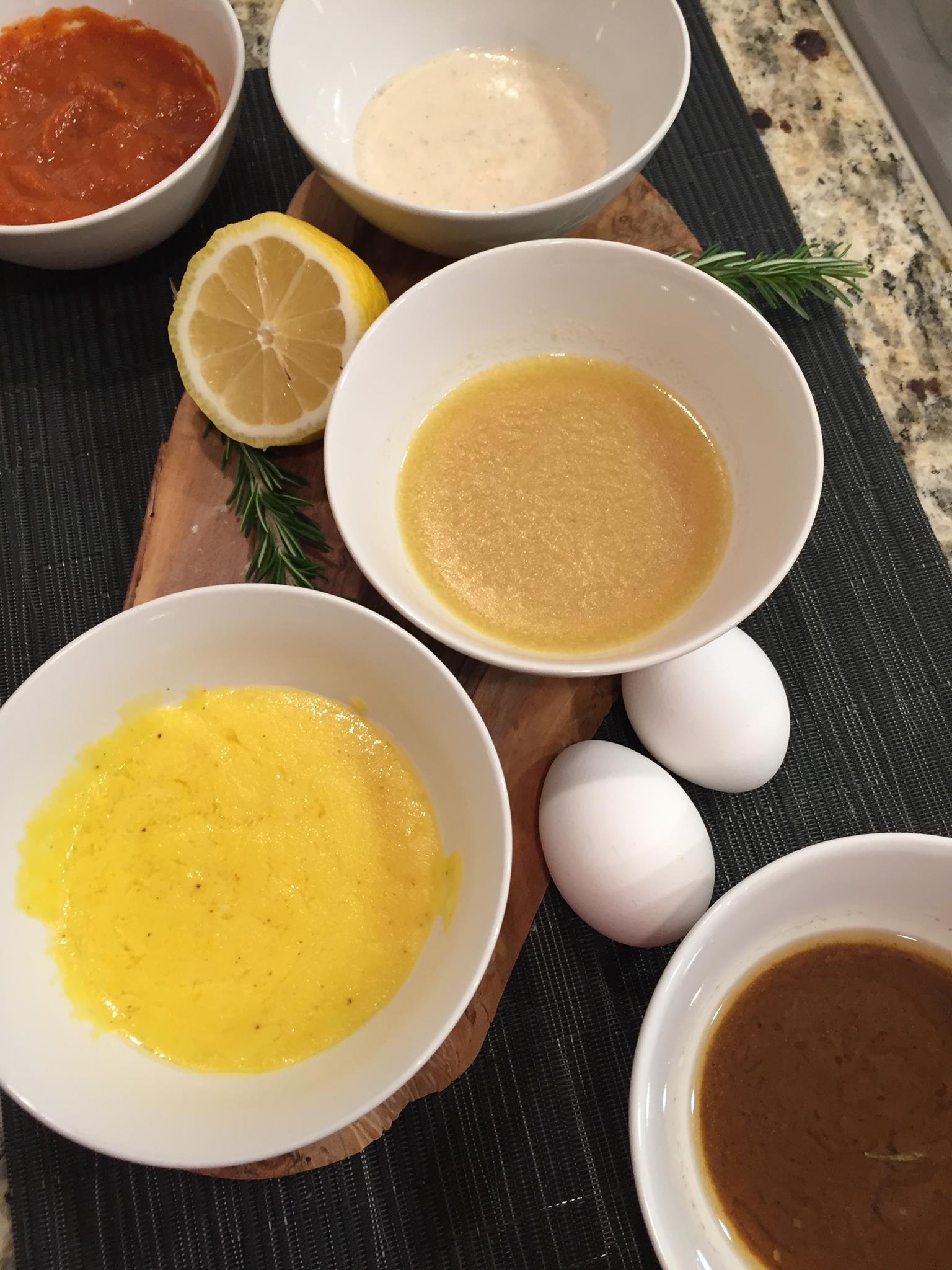
The Mother Sauces Part I
French Cuisine is considered one of the finest in the world. Its techniques are utilized in the best kitchens in the world and its sauces globally renown. The 5 mother sauces of French cuisine are below. They are the base and foundation to some of the most delicious meals we know today.
Sauce Tomat
Sauce Béchamel
Sauce Velouté
Sauce Hollandaise
Sauce Espagnole -
Korean Fried Chicken
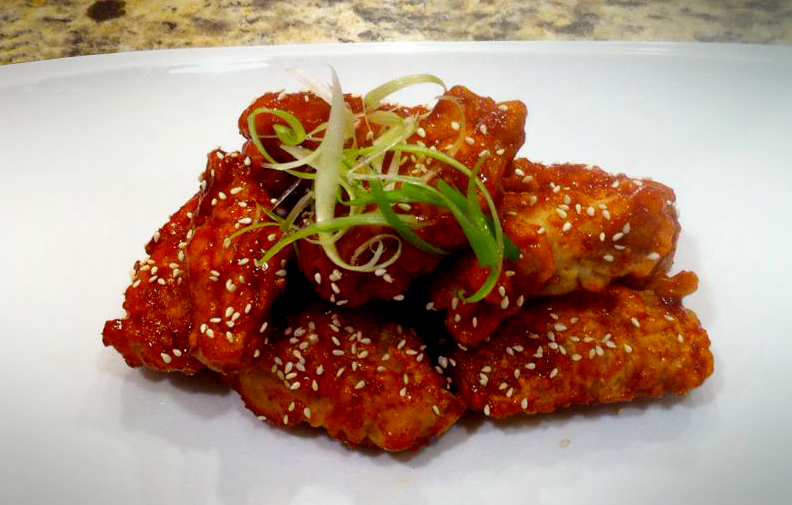
Chicken wings in one of its glorious (and many would aruge best) forms – Korean Fried Chicken. With a lighter and crispier crust than its Western counterparts, it’s unique texture can be enjoyed naked and lightly seasoned. More commonly you will find it deliciously covered in Asian flavored sauces.
-
Thanksgiving 2024 – Pork Feet Gumbo
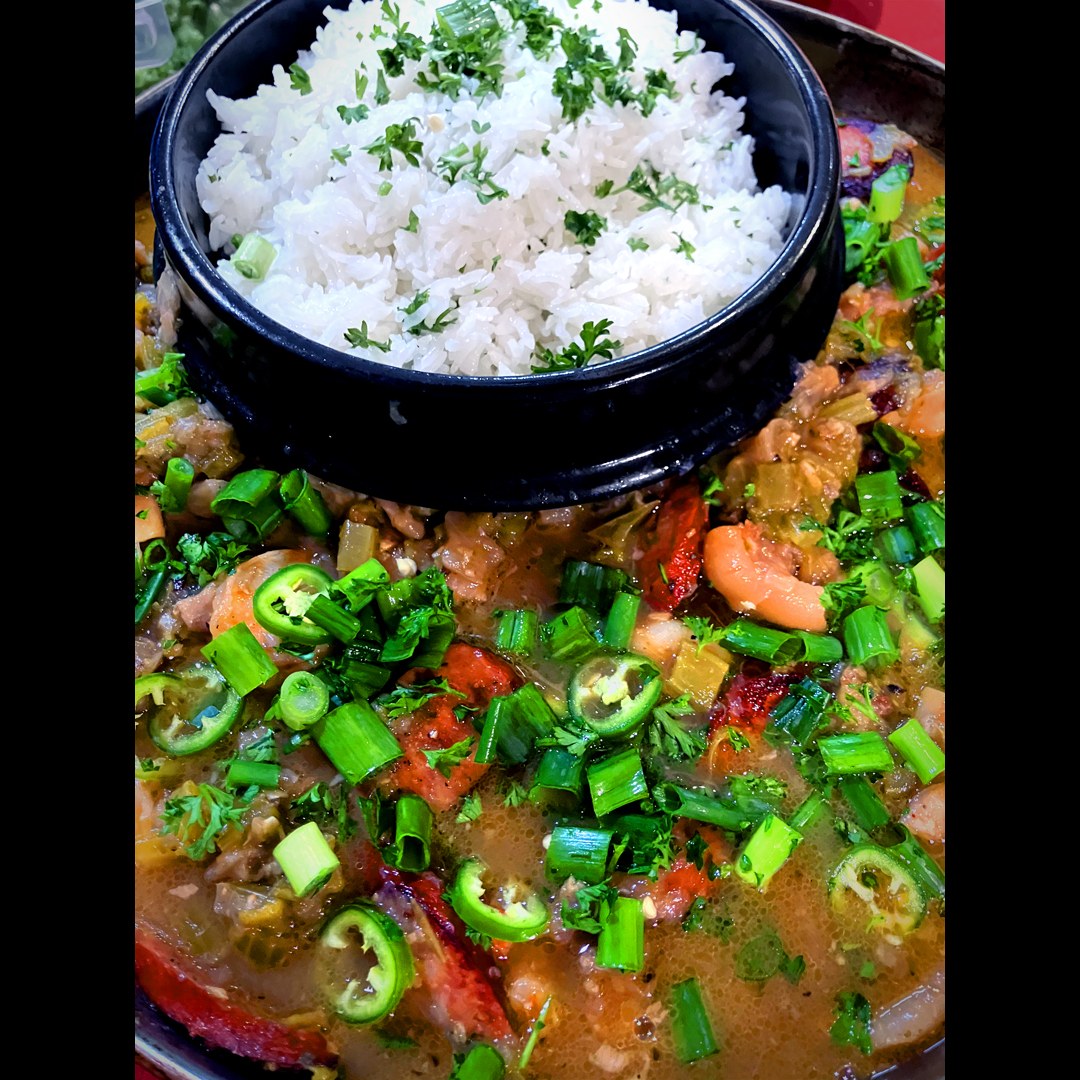
Thanksgiving contribution 2024 – Porks Feet gumbo. Both gumbo and pork’s feet are common in creole cuisine but are never combined. Just a little out of the box combination here and a pretty tasty result. Even for those who don’t enjoy pigs’ feet, the extra gelatin it provides makes the gumbo sauce especially luscious.
-
Fried Chicken
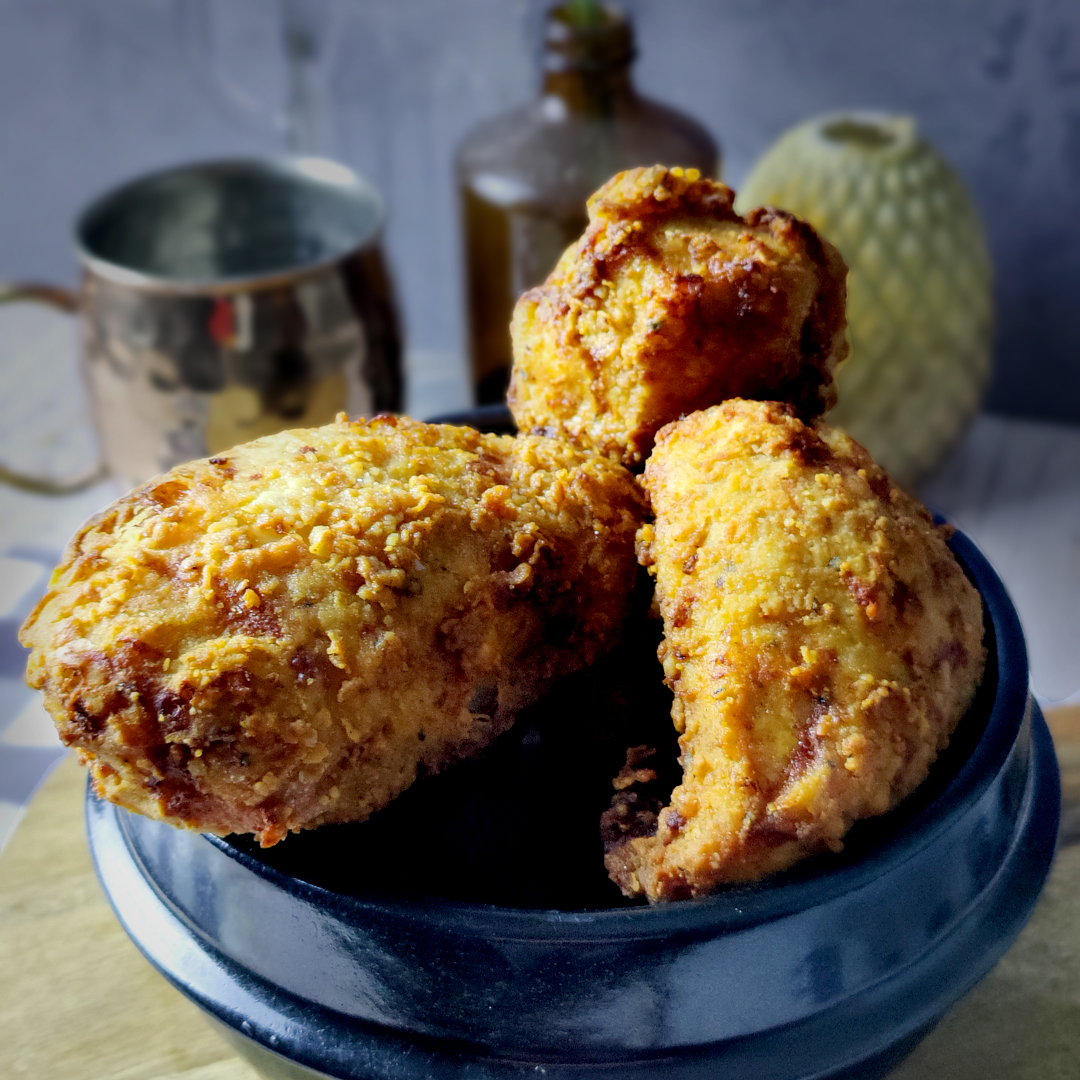
My journey to making my perfect Fried Chicken.
Still a work in progress but found some key ideas this round. Some tips below that I’m currently tweaking.
Pre frying tenderizing and flavoring, particularly with salt and acid, make a big difference
Let the chicken meld with the first layer of flour overnight. This will help the crust stay on the meat while eating.
Sous vide can be utilized to thoroughly cook the breast below 165. This makes the breast comparably as good as dark meat (not quite, but almost)
Mixing the traditional all-purpose flour with corn starch (or even potato starch) will result in a crispier crust.
-
Culture Classics – “Chả Cá Lã Vọng”
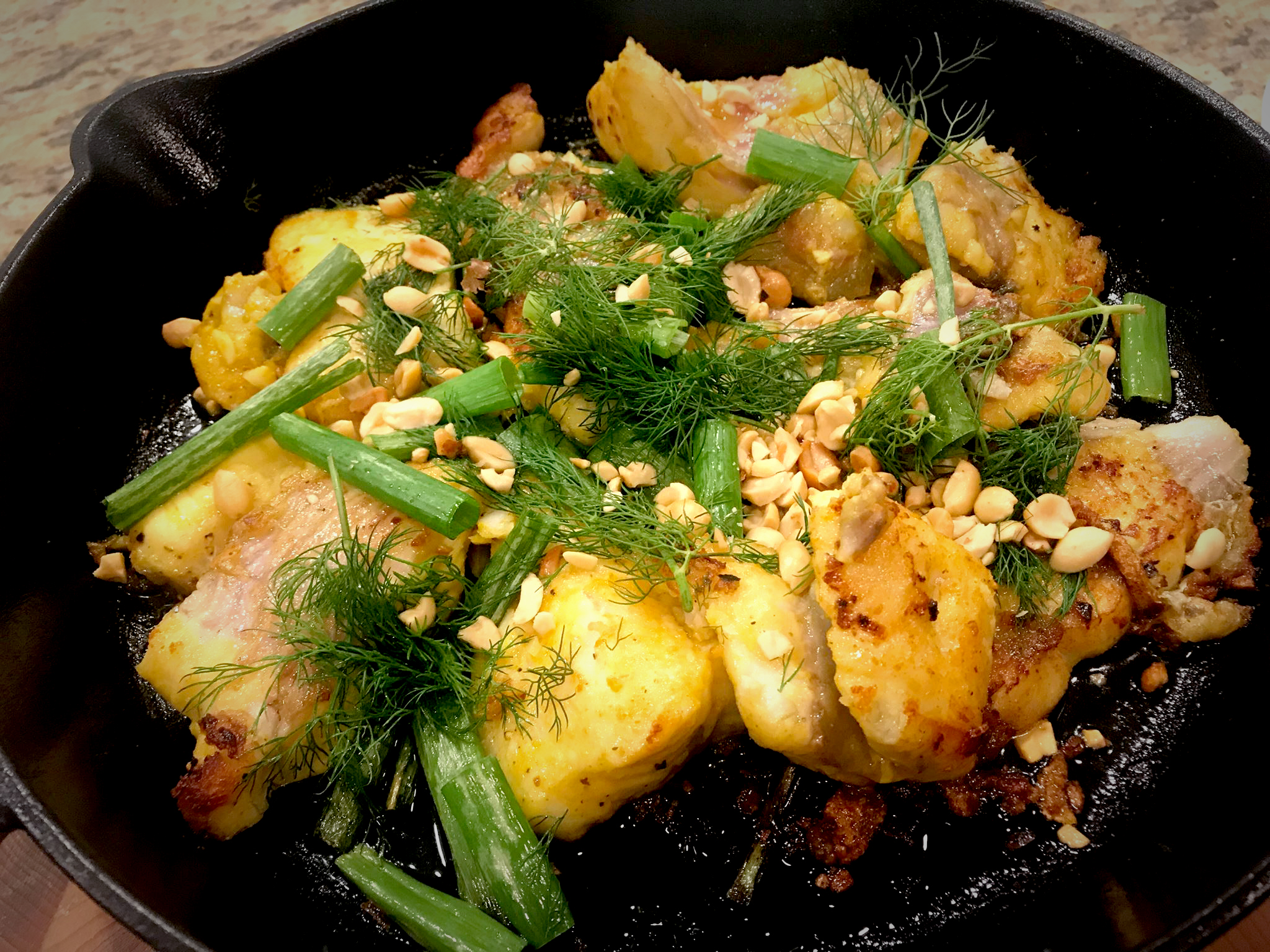
A classic Northern Vietnamese. Catfish heavily seasoned with turmeric and dill, served sizzling on a cast iron skillet. Can be served on rice crackers, with vermicelli, or even turned into spring rolls.