-
High Honor Low Manners

-
The “Insightful”

-
The Two Working Household Part II

The Working Household — Part III
The modern two-working-parent household means fewer people at home holding down the fort. And as we saw in Part II, it’s not exactly clear that families gained all that much purchasing power in exchange.
So what happened on the other side?
What did employers get?
A hell of a lot more bodies competing for work.
And competition works both ways.
When workers are scarce, employers have to compete for them. Better pay. Better benefits. Better schedules. Better treatment. If your employee tells you to fuck off and walks out the door, you actually have a problem.But flood the market with people competing for the same desirable jobs and that relationship starts to flip.
Now workers compete with each other.
How much salary will you accept? How shitty a schedule will you tolerate? How much nonsense will you put up with before quitting?
Because somewhere behind you is somebody thinking:
I’ll do it.
Maybe even for less.We didn’t just send another parent into the workforce.
We gave employers another worker to choose from.
-
The Working House Hold Part II

Somewhere along the way, we figured out that if one paycheck was good, two paychecks must be better. And for any individual family, that’s pretty hard to argue with.
But then everybody else got a second paycheck too.
So what exactly did we gain by having both parents leave the foundations of the home?
Maybe not as much as we thought.
Our newfound “purchasing power” increasingly became purchasing power against each other. We could bid more for a house—but so could the family standing next to us.
Meanwhile, our fundamental needs didn’t double. We still needed one home, one refrigerator, one dinner table, and the same groceries to feed the same family.
But something did disappear.
Flexibility.
A sick kid didn’t used to require two parents frantically figuring out who could leave work—or who they could pay to take their place. There was already someone whose time belonged primarily to the household.
Turns out, that homemaker who supposedly “did nothing” all day might have been a little more important than we gave them credit for.
-
The Five That Got Away

-
Home Making the Hard Way

Somewhere along the way, we decided that working for the big bad corporation for the sake of their money was more important than building the foundation of our own home.
That being a homemaker was somehow un-noble—that it was the easier life.
Well, maybe that’s not true all the time. We all know some lazy fuck who doesn’t do shit at work. And anyone who’s ever maintained a household knows there’s an easy way to do that too.
But there’s also a hard way.
-
I See Stupid People

If you can’t relate… then you do not interact with human beings
-
His Turn, Her Turn
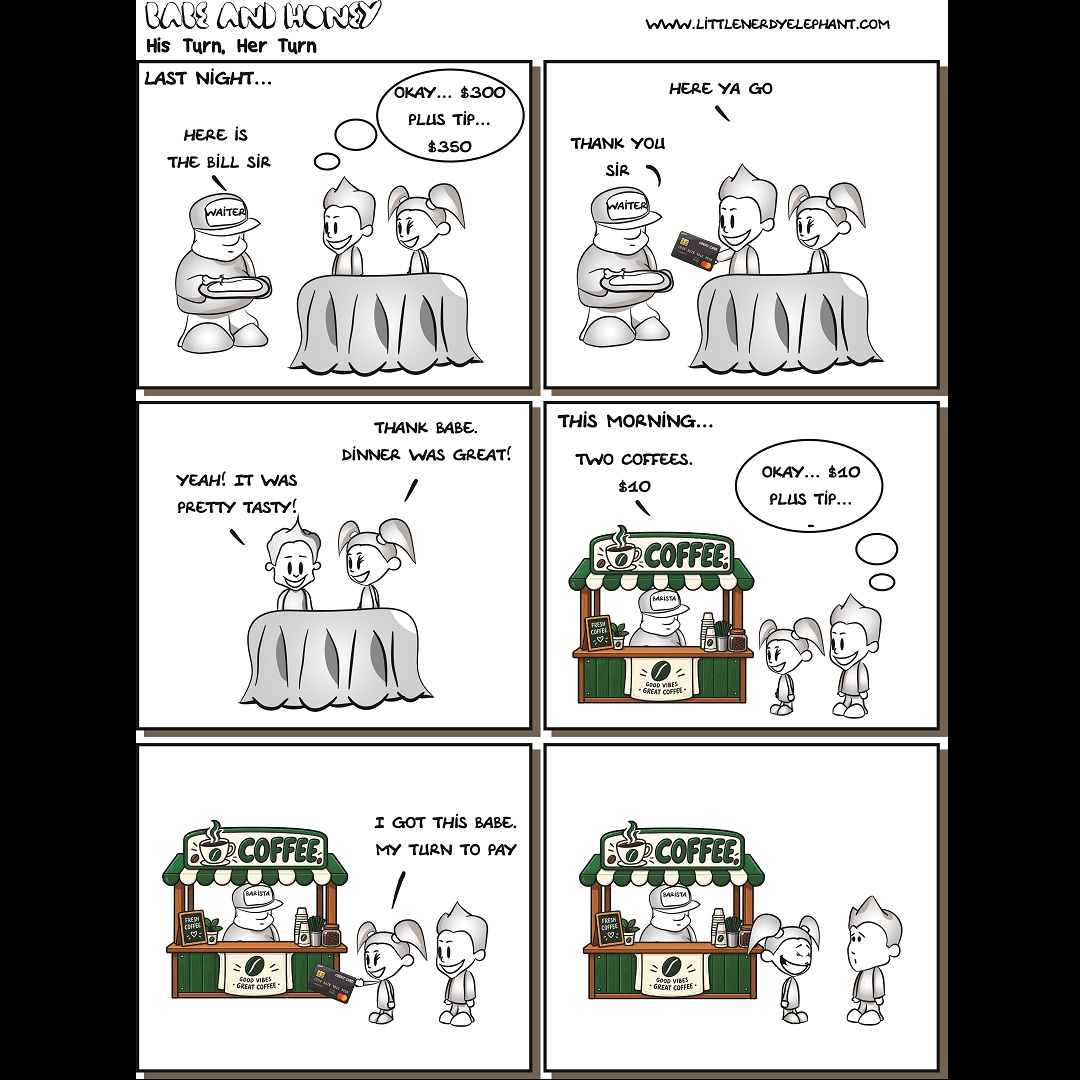
Babe and honey. Inspired by real stories and real people. Finding the humor in imperfect situations with even more imperfect characters.
Inspired by too many to count. Can’t be the one NOT contributing right?
-
Old Money Etiquette

-
Bible of BS Case Study
Condemnation by Refusal
“If you have nothing to hide, let me see your phone.”
“If you really loved me, you’d do this.”
“If you were honest, you’d just answer the question.”
“If you actually trusted me, you’d give me the password.”
“If you really cared about your family, you’d lend us the money.”
Different demands. Same bullshit.
You’re given a choice—but not really.
Comply, and you prove your honesty, love, trust, loyalty, or whatever virtue has conveniently been put on trial.
Refuse, and your refusal itself becomes evidence against you.
That’s Condemnation by Refusal.
It usually follows the same degrading pattern:
Soft Ultimatum → Virtue Held Hostage → Manufactured Entitlement → Condemnation for Maintaining Autonomy
Nobody technically forces you to comply. Instead, your character is taken hostage until you do.
Your privacy, money, time, attention, body, or thoughts—something that was yours to give—is suddenly treated as something they’re entitled to demand.
And if you maintain your autonomy?
Your refusal becomes the evidence against you.
Suspicion can be legitimate. Anxiety can be legitimate. Asking for reassurance can be legitimate.
But:
“Something has been bothering me. Can we talk about it?”
is very different from:
“If you have nothing to hide, hand me your phone.”
One is a request.
The other has already decided what your refusal means.
You are free to give someone your privacy, time, money, trust, or attention. Sometimes doing so is generous, loving, and entirely appropriate.
But there is an enormous difference between something freely given and something morally extracted.
And remember:
If someone is guilty of something, it is NOT because they refused. It is because they are guilty.
A refusal is not a confession. A boundary is not evidence. And maintaining your autonomy is not something you should have to prove your innocence for.
Commandments Violated
VI. Thou Shalt Make Improper Assumption
They assume refusal means guilt.VII. Thou Shalt Misrepresent
They disguise an invasive demand as a reasonable test of virtue.IX. Thou Shalt Indecently Manipulate
They put your character on trial and make compliance the easiest way to clear your name.X. Thou Shalt Have Indecent Regard for Others
They treat your autonomy as something their discomfort entitles them to override. -
The Dark Lord

We all know that one boss, co-worker, family member…
-
The Doomed Generation?
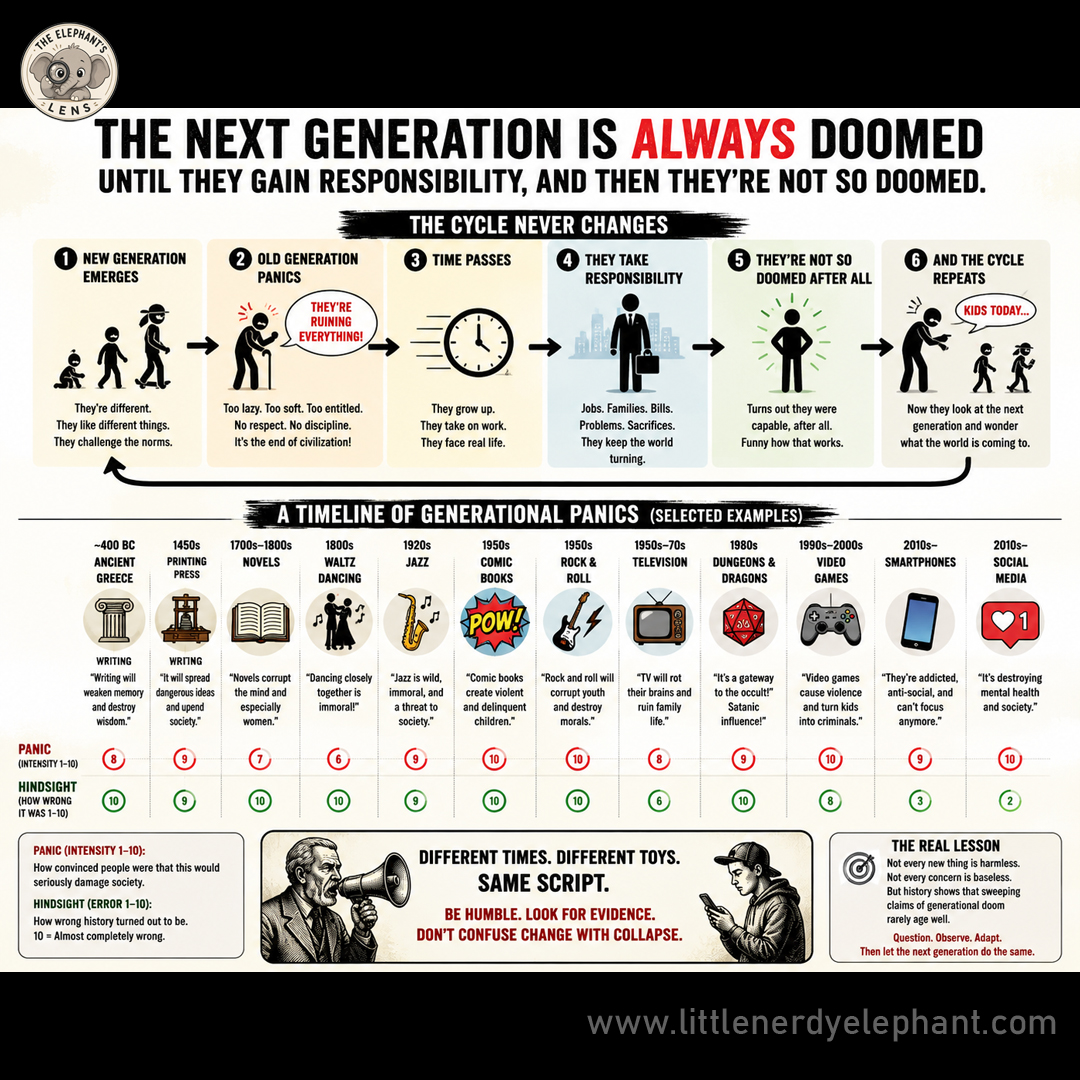
Every generation thinks the next is doomed